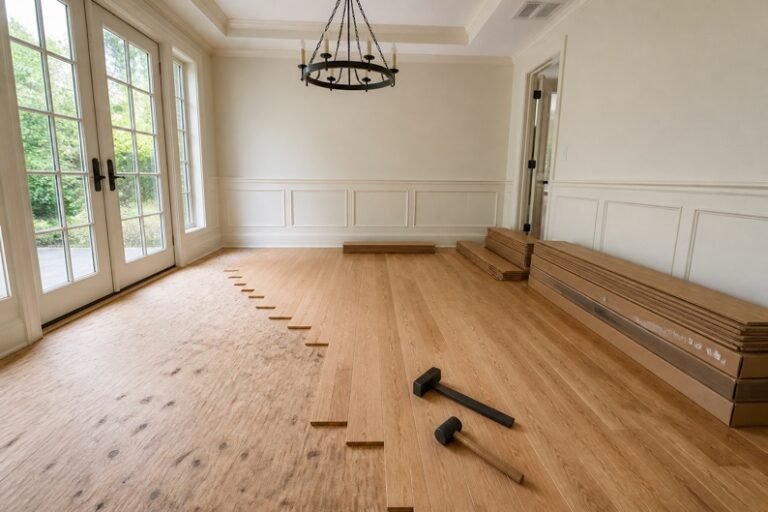
Hardwood floor refinishing in Greenwich, CT is often the smartest way to keep original oak without tearing the house apart. In most cases, a worn living room still has enough wood left for a careful sand. What we usually see in Greenwich is dull traffic in halls, not a floor that is finished for good. A hardwood floor refinishing in Greenwich, CT visit starts with thickness, stains, and how the boards move through winter.
This matters because many Greenwich houses were built long before 1978, and the floors have already been sanded once. Therefore a second sand has to respect remaining wear, old stain, and lead-safe dust control. Sound humidity also swings hard near Long Island Sound, so gaps in February do not always mean the floor failed. Besides that, a rushed sand can burn through veneer on engineered boards that look like thick plank oak.
You will learn how to tell a good refinish candidate from a floor that needs repair first. Later sections also show how moisture, finish choice, and scheduling affect daily life in a busy home. After that, you will know what a site visit should cover before anyone rolls a sander into Cos Cob or Round Hill. In short, this is the pre-sand checklist we walk through with homeowners who want the floor they already love.
What Hardwood Floor Refinishing in Greenwich, CT Really Involves
How much wear a Greenwich hardwood floor can take
Solid oak in older Greenwich rooms can often take another sand if the tongue still has meat. In most cases we measure remaining thickness at a vent, a threshold, or a closet cut. Thin boards then tell us to skip aggressive grit and keep the cut shallow. A common mistake homeowners make is assuming every “hardwood look” plank is solid stock. Engineered floors with a thin wear layer can be ruined in one pass, so we confirm the product before the machine starts.
What we usually see in Greenwich is mixed history: one room resanded in the nineties, another still original. As a result, the same house can need two approaches on the same day. Hallways take more traffic, so they lose finish first while bedrooms still look decent. We plan the cut so the whole floor lands at one even plane. Otherwise a proud board at a doorway will telegraph after the sheen goes down.
Pet scratches and heel marks look dramatic, yet they often sit in the finish, not deep in the wood. However, dark water rings around a plant or a radiator tell a different story. Those stains may need board replacement before any sanding makes sense. For example, a leak under a dishwasher in Riverside can gray several oak strips. We would rather repair those first than polish a problem into a wider blotch.
Dust, lead paint, and older Greenwich homes
Sanding makes fine dust, and that dust has to stay in the work zone. Older Greenwich houses may also have lead paint on trim that meets the floor. The EPA lead renovation rule covers paid work that disturbs paint in pre-1978 homes. Therefore we contain rooms, protect HVAC returns, and keep kids and pets out until cleanup is done. A plastic wall is not extra theater. It is how we keep the rest of the house livable.
Homeowners sometimes ask if they should sand a closet themselves over a weekend. EPA also publishes lead-safe renovation advice for DIYers in older houses. Still, a drum sander is easy to tilt, and a tilt leaves a dish in the oak. In most cases the cheaper path is a crew that already owns dust control and the right paper sequence. One gouge across a dining room costs more than the visit you skipped.
Wood dust itself is a workplace issue, not only a cleanup annoyance. OSHA wood dust guidance exists because fine particles stay in the air. We run vacuums at the tool and we do a real HEPA pass before finish. Meanwhile windows can stay closed so humid Sound air does not swell freshly cut fibers. Neighbors on a tight Greenwich lot also appreciate dust that does not drift across the driveway. For example, Cos Cob colonials show this every winter when heat runs hard.
When refinishing beats a full floor replacement
Refinishing wins when the species is still in good supply and the layout still fits the rooms. Wide original strip oak is hard to match later, so keeping it has real value. Replacement makes sense when the wear layer is gone or when subfloor bounce will not stop. In addition, some kitchens have too many patches from past plumbers. At that point a new install can look cleaner than a floor made of repairs.
A local flooring contractor in Greenwich, CT should say this out loud on the first visit. We would rather lose a refinish job than sand a floor that will fail in a year. Homeowners feel that honesty later when the sheen still looks even in winter light. What we usually see in Greenwich is relief when someone names the limit. People are not looking for magic. They want a clear yes or a clear not yet.
Budget also favors refinishing when millwork, radiators, and stairs can stay in place. Pulling every board means doors, toilets, and cabinets enter the project. So a sand and coat can return a family to the room in days, not weeks. On the other hand, if you already planned a kitchen gut, new hardwood may ride that schedule. The right call follows the renovation, not a brochure photo. In addition, Round Hill houses with long drives add the same timing pressure.
Related Articles:
Hardwood Floor Installation in Greenwich, CT: How to Plan a Floor That Lasts
Moisture, Gaps, and Seasonal Movement in Greenwich Homes
Why Long Island Sound weather moves hardwood floors
Greenwich sits close to salt air, wet springs, and dry winter heat. Wood takes on moisture in August and gives it back in February. As a result, hairline gaps in late winter are common on strip oak. Those gaps often close again when the house humidifies. A common mistake homeowners make is filling every winter crack with a hard filler that then humps in July. However, Old Greenwich lots with tight access make the same issue more visible.
Radiant heat under dining rooms adds another swing, especially in backcountry colonials. Hot water in the slab or the subfloor dries the boards from below. Then the finish can look tight while the wood is still shrinking. We ask how the heat runs before we pick a finish schedule. Otherwise a beautiful coat can check over a floor that is still moving. As a result, Riverside kitchens next to wet entries teach this lesson quickly.
Crawl spaces and damp garages next to mudrooms also feed moisture upward. EPA’s mold and moisture pages are blunt about wet building assemblies. If the oak smells sour or feels cool and heavy, we pause the sand. Refinishing will not fix a leak from a hose bib or a failed shower pan. Dry the source first. Then the sander can do honest work. Meanwhile, backcountry rooms over garages keep proving the same point.
Testing moisture before sanding day
We meter the floor in several rooms, not only the pretty center of the living room. Bath edges, exterior walls, and kitchen sinks are the honest spots. Readings that jump from room to room mean the house is not ready. In most cases we wait rather than gamble on a finish that will haze. Waiting a week is cheaper than recoating a floor that bloomed overnight. Therefore a Greenwich dining room with south glass is a useful local test.
New concrete nearby, like a mudroom pour, can still be drying into the oak. Plastic over a slab does not always stop that drive. Therefore we ask what other trades just finished in the house. Painters, tilers, and HVAC techs all change indoor humidity. A refinish calendar has to sit after those trades, not in the middle of them. Still, a center-hall colonial near the Sound will show the movement clearly.
If a board is loose or hollow, moisture is only one possible cause. Failed fasteners and a tired subfloor can mimic a wet floor. We check both so we do not sand a drum that still rattles. For instance, a Cos Cob split-level may need screws in a hallway before paper hits the oak. That extra hour keeps the new sheen from telegraphing every bounce. Besides that, a mudroom off a sandy driveway makes the wear obvious.
Gaps, cupping, and what they mean for refinishing
Cupping is when the edges sit high and the center sits low. It usually points to moisture under the floor, not a bad stain color. Sanding a cupped floor flat can leave thin edges that splinter later. So we find why the cup happened before any aggressive cut. If the underside is still wet, the boards can cup again after we leave. After that, the finish in a busy hall tells you if the plan was honest.
Crowning is the opposite shape, and it often follows a sand that happened too soon. Someone flattened a cup, then the wood dried and the center rose. That is why we delay when meters disagree. Patience here protects the wear layer you cannot buy back. Greenwich homeowners who wait tend to keep the original oak longer. In most cases the next heating season in Greenwich confirms the choice. For example, Cos Cob colonials show this every winter when heat runs hard.
Small gaps can be filled with a mix that moves a little with the seasons. Wide seasonal gaps should stay gaps, not a rigid stripe of putty. For larger missing pieces, hardwood floor repair in Greenwich, CT is the better first step. We would rather infill a damaged bay than smear filler across a whole room. The repair then disappears under the same stain and sheen as the rest of the floor. In addition, Round Hill houses with long drives add the same timing pressure.
Choosing a Finish After Hardwood Floor Refinishing in Greenwich, CT
Oil-based and water-based finishes in busy homes
Water-based finishes amber less and they smell lighter in a closed colonial. Oil-based coats still have fans because the warmth looks familiar on red oak. Neither is “better” in the abstract. The house decides. Kids, dogs, and a cook who drops pans need a film that can take a hit. We match the chemistry to the traffic, not to a trend on a phone screen. However, Old Greenwich lots with tight access make the same issue more visible.
The National Wood Flooring Association keeps consumer publications on wood floor care that back this up. Finish is a system with sealer, coats, and cure time. Skipping a coat to save a day usually shows up as burnish in the hallway. In addition, cheap satin can look cloudy on wide-plank rooms with north light. We bring samples into the actual room because Greenwich light is not showroom light. As a result, Riverside kitchens next to wet entries teach this lesson quickly.
Screen and recoat can refresh a floor that is dull but not raw. That path only works if the existing film still bonds. Wax, silicone sprays, and old oil soap can block a new coat. A test patch in a closet tells the truth before we commit the whole house. If the patch crawls, we go back to a full sand instead of fighting chemistry. Meanwhile, backcountry rooms over garages keep proving the same point.
Sheen, color, and light in Greenwich rooms
High gloss shows every dent and every bit of dust in a low winter sun. Matte hides more, yet it can look tired if the floor was never flattened well. Satin is the middle path we use most in family rooms. Window walls toward the Sound will also bounce sheen around the space. We view samples morning and afternoon before anyone picks a can. Therefore a Greenwich dining room with south glass is a useful local test.
Stain on old oak is not a paint chip. The grain drinks color in streaks. A common mistake homeowners make is matching a cabinet door instead of a floor sample. Cabinets sit vertical. Floors take traffic and sunlight. For example, a dark walnut look on red oak can go redder than the photo. We stain a board from the actual room whenever the client wants a big color shift. Still, a center-hall colonial near the Sound will show the movement clearly.
Natural oak with a clear coat still changes as UV hits the south rooms. Rugs then leave a postcard of the old color when they move. We talk about that before stain, not after the furniture comes back. Rotation of rugs helps, but it will not freeze the wood in time. Honest expectations keep the job from feeling like a bait and switch. Besides that, a mudroom off a sandy driveway makes the wear obvious.
Cure time, pets, and moving back in
Walkable and fully cured are not the same moment. Socks on day two do not mean dog nails on day two. Water-based films still need time before area rugs trap vapors. Oil-based films need even more air. We put the calendar on paper so nobody guesses from a smell test. After that, the finish in a busy hall tells you if the plan was honest. In most cases the next heating season in Greenwich confirms the choice.
Pets should stay elsewhere until we say the film can take claws. A frantic dog on a tacky coat will write figure eights you cannot buff out. Kids on scooters belong in the same delay. Meanwhile you can often use a back stair or a plywood path we leave on purpose. That small inconvenience is how the sheen survives the first week. For example, Cos Cob colonials show this every winter when heat runs hard.
Furniture pads matter more than brand-name polish. Metal feet and stone tables will print the new film if they go down early. We share a simple move-in order: beds last, rugs later, plants after a leak check. You can see past jobs in our flooring project gallery if you want a sense of sheen in real rooms. Photos help, yet your light and your pets still set the final plan. In addition, Round Hill houses with long drives add the same timing pressure.
Hiring Help for Hardwood Floor Refinishing in Greenwich, CT
What a site visit should cover
A useful visit is slow. Someone should crawl to a vent, check stairs, and ask about leaks. They should also ask when the floor was last sanded, even if you only have a guess. Moisture meters belong on that visit, not as a surprise on sanding morning. If the visit is a five-minute glance from the doorway, keep shopping. Greenwich rooms hide problems under rugs and behind kitchen islands. However, Old Greenwich lots with tight access make the same issue more visible.
Access is part of the estimate. Tight Old Greenwich lots change how we stage machines. Co-op buildings add elevator rules and quiet hours. A house with a nanny, a dog, and a home office needs a room-by-room plan. We write that plan down so sanding day is not a negotiation in the driveway. Clear access keeps the dust plan honest too. As a result, Riverside kitchens next to wet entries teach this lesson quickly.
You should leave the visit knowing whether you are refinishing, repairing, or replacing. The schedule should also say how long you will live around plastic and fans. Price without that picture is not a price. It is a hope. Hope is a bad way to schedule a family around a sander. Meanwhile, backcountry rooms over garages keep proving the same point. Therefore a Greenwich dining room with south glass is a useful local test.
Repairs that must happen before the sander
Loose treads, missing nosings, and broken thresholds will telegraph through new finish. Squeaks in a center-hall colonial often sit at a few fasteners, not the whole floor. We fix those first so the sand does not chase a moving target. Pet-damaged doorways may need new strips that then take the same stain. Skipping that step leaves a shiny floor with a chewed corner that still bothers you. Still, a center-hall colonial near the Sound will show the movement clearly.
Nail pops and proud tongues will rip paper and leave chatter marks. A good crew sets fasteners and checks for hidden vents under rugs. Heat registers that sit proud of the oak need attention too. In most cases those small metal jobs take minutes and save the whole field. Rushing past them is how a “simple refinish” turns into extra days. Besides that, a mudroom off a sandy driveway makes the wear obvious.
If the kitchen is about to change, tell us before we stain. New islands, new sun, and new traffic patterns change where the eye lands. We can leave a blend zone or wait until cabinets land. Sequence is a design choice, not only a calendar choice. Talking early keeps the oak from fighting the next renovation. After that, the finish in a busy hall tells you if the plan was honest. In most cases the next heating season in Greenwich confirms the choice.
How to compare estimates without chasing the lowest number
Line items should name coats, dust control, repairs, and what happens if meters fail. A number that only says “sand and finish” is too thin for a Greenwich house. Ask who owns the stain if the color shifts in south light. Also confirm how many people will be on site and where trucks park. Those answers predict the week you will actually live through. For example, Cos Cob colonials show this every winter when heat runs hard.
The cheapest bid often skips containment or skips a coat. You pay later in dust on the china or in a hallway that burns through. On the other hand, the highest bid is not automatically the careful one. Listen for how they talk about moisture and old veneer. That conversation is the real quality check. In addition, Round Hill houses with long drives add the same timing pressure. However, Old Greenwich lots with tight access make the same issue more visible.
When you are ready, request an estimate and send a few photos of the worst traffic lanes. Photos help us arrive with the right questions. They do not replace meters on the floor. Still, they save a visit that would only discover wall-to-wall carpet. We would rather start with a true picture of the oak you want to keep. As a result, Riverside kitchens next to wet entries teach this lesson quickly. Meanwhile, backcountry rooms over garages keep proving the same point.
A Better Next Step for Your Greenwich Floor
Hardwood floor refinishing in Greenwich, CT works when the wear layer, the moisture, and the finish plan all agree. Check thickness, test wet spots, and treat dust as a real job, not a mess to ignore. Gaps that open in winter can be normal near the Sound. Cups and sour smells are not. To sum it up, a slow visit beats a fast sand every time. Therefore a Greenwich dining room with south glass is a useful local test.
If the boards are too thin, the next honest talk may be about new oak instead of another cut. You can read how we plan hardwood floor installation in Greenwich, CT when refinishing is no longer the right tool. Call or write when you want a walkthrough in the actual rooms. Bring the leak history and the last time anyone sanded. Then we can tell you whether the sander should start, wait, or stay on the truck.
Frequently Asked Questions (FAQs)
Often yes, if enough wear layer remains. We measure at a vent or threshold before we commit. Thin engineered floors may need a different plan.
Most family homes take several days for sanding, coats, and a careful cure window. Pets and rugs wait longer than sock traffic. The calendar depends on product and humidity.
It makes dust, so we contain rooms and vacuum at the tool. Older homes can also involve lead-safe practices around painted trim. Plan on living around plastic for a short stretch.
You can, but sheen and stain may not match later. We usually recommend a whole visual field so the house does not look patched. A site visit decides if a blend is realistic.
Clear small furniture, say where pets will stay, and tell us about leaks. Leave HVAC access open. Do not soap the floor the night before.